





 1
1 2
2 3
3 4
4 5
5 6
6 7
7 8
8 9
9 10
10 11
11Learn what AZcendant®'s HandyAVI® software can do, and try a free, fully functional, trial download!
HandyAvi® software allows you to make time lapse and other types of videos using a digital camera. It works with webcams, video boards, USB/video adapters, IP cameras, and any video recording device with a DirectShow driver.
It can also turn a collection of JPEG images into a movie.
Just set up the camera and select the HandiAvi® task you wish to do. A panel specific to the task will be shown which will allow you to begin creating Time lapse, Surveillance, Astronomy, Motion Detection, Meteor Capture, or Animation videos.
HandiAvi® also has superb documentation so you won't be left wondering how some feature really works.
HandiAvi® features 5 capture panels:
Contact Us!
Send Mail to:
Support@AZcendant.com
or call us at:
480-897-7425
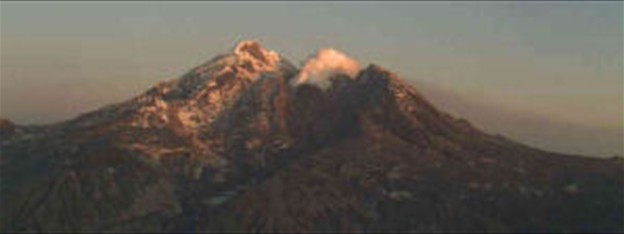
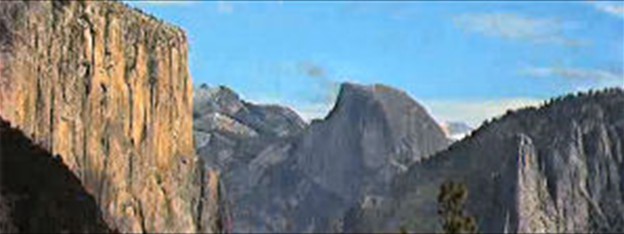
Time lapse movie making: Perfect for capturing the progressions of nature. This feature can be used to make beautiful nature time lapse videos. Time lapse movie making can be used to make a video showing a flower bloom, a plant grow, sunrises, sunsets, building construction, activity in a bird's nest, etc. The possibilities are endless.
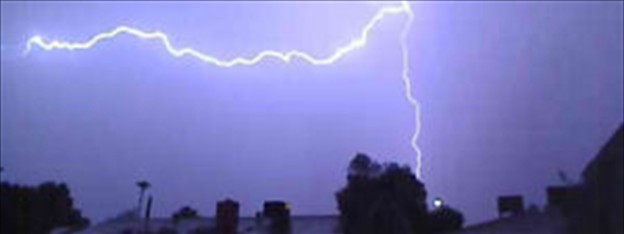
Meteor Trail Imaging: Perfect for capturing meteors during meteor showers. This software feature has an algorithm specially designed to capture meteor trails, and exclude recording of other events you don’t wish to capture, such as star scintillation. A sophisticated algorithm allows your webcam to capture entire meteor trails from start to finish by capturing the dim pre and post frames that other software would not capture..
Astronomy/Planetary Photography: This feature is great for those who wish to capture lunar and planetary images. Using HandyAvi and a webcam is the easiest and most inexpensive way to begin astroimaging. This can be done with any telescope but if you have a Meade telescope, HandiAvi® features a telescope control panel, to allow you to control the telescope from your computer. This allows the planet to remain centered while video capture is underway.
Motion detection imaging: HandiAvi® is great for surveillance purposes. Our IP camera motion detection subsystem only captures images when objects within the frame move. Instead of sifting through hours or even days of footage, you can quickly scan a short video containing only people or objects that moved.
Our motion detection system features a sensitivity setting, allowing you to control the amount of movement necessary to capture an image.
HandiAvi also allows you to select areas within the frame to limit image capturing to a desired area. HandyAvi is as good as a tape recorder since we designed it to recover your video even if your machine crashes during video capture.
Protect your assets, have everything on record in case of break-ins or theft!
Animation: HandiAvi® allows you to make your own animated movies at home. Some common animation possibilities involve the use of clay, puppets, and other props. Combine individual frames and speed them up to bring your vision to life using our Animation subsystem.
HandyAvi® also contains powerful AVI file movie viewing and editing functions to view your time lapse and other videos:
- Movie viewing
- Movie editing
- Make time-lapse movies from existing movies
- Scan a file for meteors
- Join movie files X
- Make a movie from still images
- Stack astronomical images
- Telescope control
- Automatically upload movie files to your website
- Set active camera time windows
- Continue videoing automatically after a shutdown
- Automatically recover an interrupted video
The AZcendant® IP Camera Filter allows you to view and capture videos from wired or wireless IP cameras.
Ideal for surveillance, our IP Camera Filter allows you to stream footage from a security camera in real-time.
You can view multiple IP camera time lapse sources simultaneously by purchasing a License to support 1, 2, 5, 10, 15, or 20 cameras at a time. Download a fully-fuctional free trial of our IP Camera Filter today.
Customer Comments:
HandyAvi Surveillance and Time lapse:
I use this program with a wireless camera I bought on ebay, for home security purposes. I use it to time lapse video survey the front of my house. Your program was by far the most inexpensive one out there for time lapse purposes.... I had to do a little research to see if this program would suit my needs, and it does, absolutely perfect I might add.
HandyAvi meteor trail imaging:
"Excellent, Excellent, Excellent!!
I let the program run all night, and even with passing clouds there was not one false detection in the group. I picked up many "very dim" objects passing through the clouds, with no false detections. I believe you have hit the solution on the nose. I am extremely happy with the results. I believe your program is now the easiest to use, and best of the group, of the existing meteor detection programs."HandyAvi California Fireball video (Click here to see video):
"This was taken with HandyAvi operating from a second port of the Sentinel all-sky camera system here in Yuba City, California.
This movie is spreading on the Internet & local TV with CREDIT references to HandyAvi & the Sentinel System at every opportunity.
A major event, which might lead to a recovery attempt by NASA, or JPL, if they hear/read about it, and certainly by private local citizens to obtain fragments.
Rare to get a compete video.... Sentinel did not capture the explosion. Just the Fireball."
HandyAvi support when a problem was encountered:
"I'm sorry I missed your call today. I was in a meeting at work.
I have to tell you I am so incredibly impressed with the service level. I never really thought I'd even hear from you. I had a break in at my house... I'm using this setup to attempt to catch them in the act... I know they will be back, I just don't know when.Anyway... thank you so much for both responding so quickly, taking the problem so seriously, and creating a great little piece of software!"
[We resolved the problem and provided a Beta release to this customer within 12 hours... We can't always guarantee that level of service but we try...]
HandyAvi - Catching a thief using time lapse and motion-detection:
"...we have deliveries at 2 and 3 am most days when I am fast asleep in my bed and recently things have been going missing but thanks to your motion detection programme and one very small and very cheap web cam we have 'one less' dishonest delivery driver to worry about. The cost of 40 dollars (£24 UK) to buy 'HandyAvi' has saved me about £6 per day in losses
Many, many, thanks,..."
We helped solve a user problem:
It’s working perfectly! Good results from an overnight test.
Thanks for all your help in getting this up and running.
I’ll be purchasing licensing codes tonight, and putting your software to use.We helped a user solve an IP Camera problem:
Wow, you got it! You're amazing. On a sunday, no less.
I bought this camera because I trust [seller of camera] to sell good stuff, but I might not keep it [the camera]. The hardware may be okay, but the software it came with [it, the camera] really sucks. Now that I can use HandyAvi, maybe I'll keep it [the camera]. Kinda amazing these haven't been standardized. Makes it pretty hard to produce software like yours. Really appreciate what you do.
We helped a user connect his NTSC camera:
Thanks for the help earlier. I just discovered another RCA-to-USB product that works
with HandyAVI. It is the EasyCAP DC60 - USB 2.0 Audio/video Creator. I bought 3 from
Amazon.com for $7.05 each. I just installed one in my Vista machine and it worked
immediately. ... all is working for now.
I hope to produce some beautiful images of Saturn soon. I'll let you know.[We have tested many USB/Video adapters and each of them worked well with HandyAvi...]
Something we had not thought of - time lapse of sleep apnea:
I use this program for time lapse of a nights sleep, then take the video to my sleep Doctor so he can see what is going on. It has been a great help.

(Association of Software Professionals)